Bioreactor off-gas refers to a collection of gaseous products generated by microorganisms or cells during metabolism and discharged from the reactor along with aeration gas. Variations in the concentrations of its components directly reflect substance transformation and energy metabolism within the culture system, serving as a core non-invasive, real-time online window to obtain physiological information in Process Analytical Technology (PAT).
I. Full-Spectrum Profile of Off-Gas Components
1.1 Major Constituents (Macro Gases)
Component | Source & Sink | Process Information Value |
O₂ | Consumed by cells, residual in off-gas | Directly reflects oxygen uptake rate, correlated with cell activity and oxygen supply efficiency |
CO₂ | Produced via cellular respiration and metabolism | Indicates carbon metabolic intensity, respiratory activity, and acid-base balance status |
N₂ | Inert gas, mostly from aeration carrier gas | Acts as internal standard for flow calibration and gas balance calculation |
H₂O (Water Vapor) | Evaporation from aeration and metabolic water production | Reflects water evaporation rate, fermentation broth volume change, and system heat load |
1.2 Trace & Ultra-Trace Metabolic Markers
Beyond O₂ and CO₂, off-gas contains numerous volatile substances indicative of C, N, and S metabolic pathways:
Nitrogen-containing substances: NH₃ (ammonia) – marker of protein metabolism and deamination, used to assess nitrogen source utilization
Sulfur-containing substances: H₂S, SO₂, thiols – indicators of sulfur-containing amino acid metabolism and sulfate reduction
Volatile Organic Compounds (VOCs): alcohols (ethanol, methanol), aldehydes, organic acids (acetic acid, propionic acid), ketones, esters – carbon source metabolic byproducts or secondary metabolites
Characteristic gases: H₂ (anaerobic/microaerobic metabolism), CH₄ (anaerobic fermentation), specific flavor/odor substances
Mass spectrometry enables ppm to ppb-level detection of these trace components, capturing metabolic information unobtainable via conventional gas analyzers.
II. Core Metabolic Parameter System
The core value of off-gas analysis lies in calculating three key respiratory metabolic parameters based on O₂ and CO₂ concentration changes, combined with aeration flow rate and bioreactor weight data.
2.1 Oxygen Uptake Rate (OUR)
Refers to the volume of oxygen consumed by cells per unit time per unit volume of fermentation broth. It is affected by biomass concentration, nutrient composition, dissolved oxygen level, growth rate, and carbon source type/concentration.
2.2 CO₂ Evolution Rate (CER)
Represents the rate of carbon dioxide released by cellular respiration, serving as a direct measure of total carbon metabolic intensity.
2.3 Respiratory Quotient (RQ)
RQ is the most diagnostically valuable comprehensive indicator in off-gas analysis:
RQ ≈ 1.0: Carbohydrates as primary carbon source with complete oxidative metabolism
RQ < 1.0: Fat/hydrocarbon metabolism or oxygen limitation
RQ > 1.0: Anaerobic metabolism or accumulation of organic acids (e.g., RQ exceeds 2.0 during ethanol fermentation)
Under carbon source limitation with sufficient oxygen supply, RQ approaches its theoretical value; significant deviations occur under oxygen deficiency or metabolic pathway shifts
During the transition from growth to product formation (e.g., shift from mycelial growth to product synthesis in antibiotic fermentation), RQ exhibits characteristic inflection points, which can be used as decision criteria for process switching.
III. Comparison of Monitoring Technology Systems
3.1 Conventional Combined Configuration
Analyte | Technical Principle | Characteristics | Typical Precision |
CO₂ | Non-Dispersive Infrared (NDIR) | Utilizes characteristic absorption peaks of CO₂ at 2.6–2.9 μm and 4.1–4.5 μm | ±(1%–2%) Full Scale (FS) |
O₂ | Paramagnetic Method | Leverages high magnetic susceptibility of O₂ to measure magnetic field deflection | High precision, fast response |
O₂ | Electrochemical Method | Redox reaction of oxygen molecules at electrodes generates electric current | Low cost, requires regular electrode replacement |
This is the most widely adopted configuration in industrial sites, featuring mature, stable, reliable performance for continuous online detection without interfering with fermentation processes; high-temperature sterilization is not required.
3.2 Advanced Analytical Technologies
Process Mass Spectrometry (Process MS)
Principle: Gas molecules are ionized and separated by mass-to-charge ratio (m/z) to generate full mass spectra
Advantages: Detects all gas components (including VOCs and odorants); response time < 20 ms; ppm-level or higher sensitivity; resolution superior to 1 amu
Limitations: High equipment cost; strict pre-treatment (dehydration, dust removal); regular calibration required
Applications: Real-time analysis of complex inlet gas mixtures in mammalian cell culture (vaccines, monoclonal antibodies, gene therapy), assessment of batch-to-batch variations and process deviations
Gas Chromatography (GC)
Separates different components via varying partition coefficients on chromatographic columns
Suitable for offline or online laboratory analysis, enabling accurate identification of unknown VOCs
Long analysis cycle (minute scale), unsuitable for closed-loop control requiring second-level response
Optical Array Sensing
Based on differential optical responses of analytes (including hazardous compounds)
Excellent performance in detecting and identifying diverse VOCs, applied for characterization of volatile organics collected from bioreactor headspace
IV. Key Pre-Treatment Technologies
4.1 Necessity and Challenges of Dehydration
Fermentation off-gas is nearly water-saturated (water content above 4.4% at 30°C). Water vapor severely interferes with measurements from NDIR CO₂ analyzers, thermal conductivity oxygen analyzers, and mass spectrometers, and may even damage instruments.
Common dehydration methods:
Cooling dehydration: Cool gas to 0–4°C for gas-liquid separation, then reheat to room temperature – simple operation but risks dissolution loss of soluble gases (CO₂, NH₃, H₂S)
Adsorption/filtration dehydration: Desiccants or hydrophobic membrane filters – chemical compatibility between gases and desiccants must be evaluated
Key contradiction: Soluble gases such as CO₂, NH₃, and H₂S dissolve in condensate during dehydration, leading to underestimated concentration readings. For precise analysis, mathematical compensation for solubility loss or fully heated traced pipelines (80–240°C) to maintain gaseous water vapor before instrument entry is required.
4.2 Filtration and Dust Removal
Off-gas often carries foam, cells, and solid particles; inline filters are mandatory to prevent:
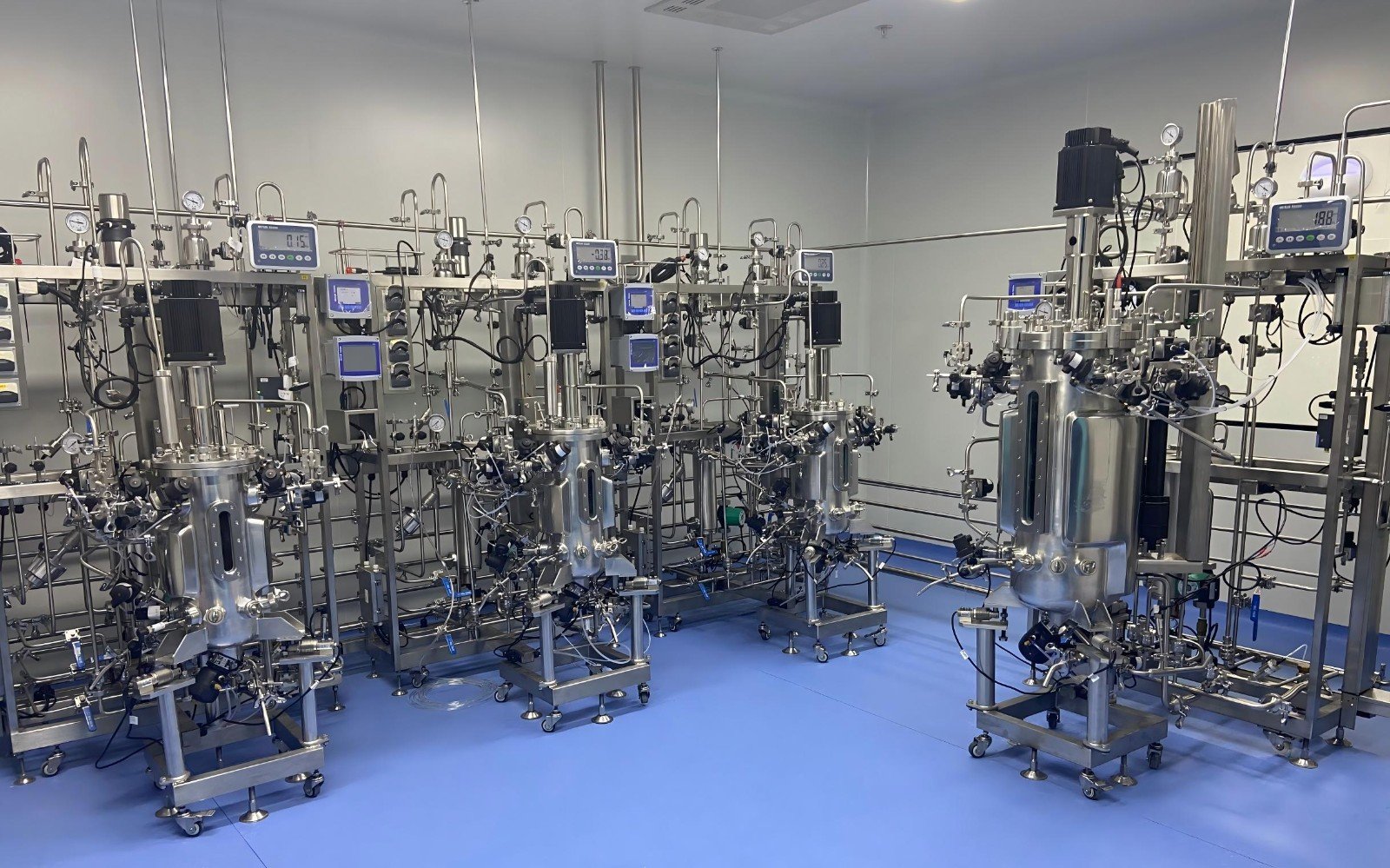
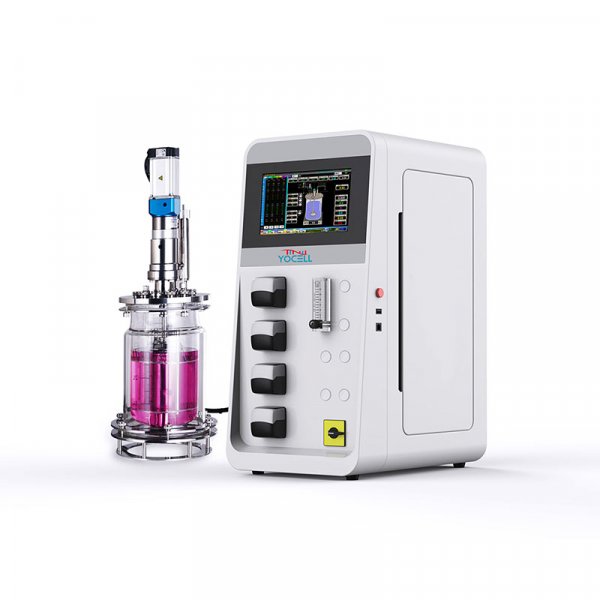
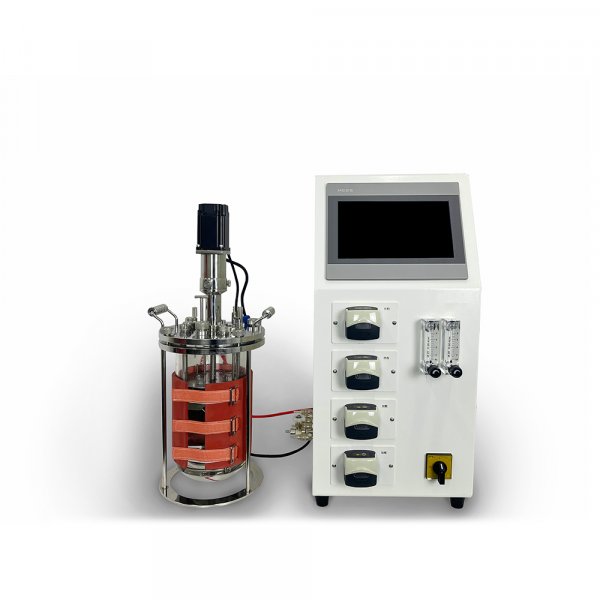
YOCELL offers a diverse range of bioreactors, providing fermentation process equipment suitable for various cultures and application scenarios.