1. The Importance of CAR-T Therapy and Lentiviral Vectors
CAR-T therapy achieves precise anti-tumor effects by genetically engineering patient T cells. Its clinical efficacy has achieved significant breakthroughs in hematological malignancies. However, the production process of CAR-T cells is complex, with the cost of gene transduction mediated by lentiviral vectors accounting for as much as 30%-50% of the total cost. Moreover, the activity and purity of the LV directly affect the function and safety of CAR-T cells. Therefore, developing an efficient, stable, and GMP-compliant downstream purification process for LV is a core issue for promoting the industrialization of CAR-T therapy.
2. Downstream purification steps of lentiviral vectors
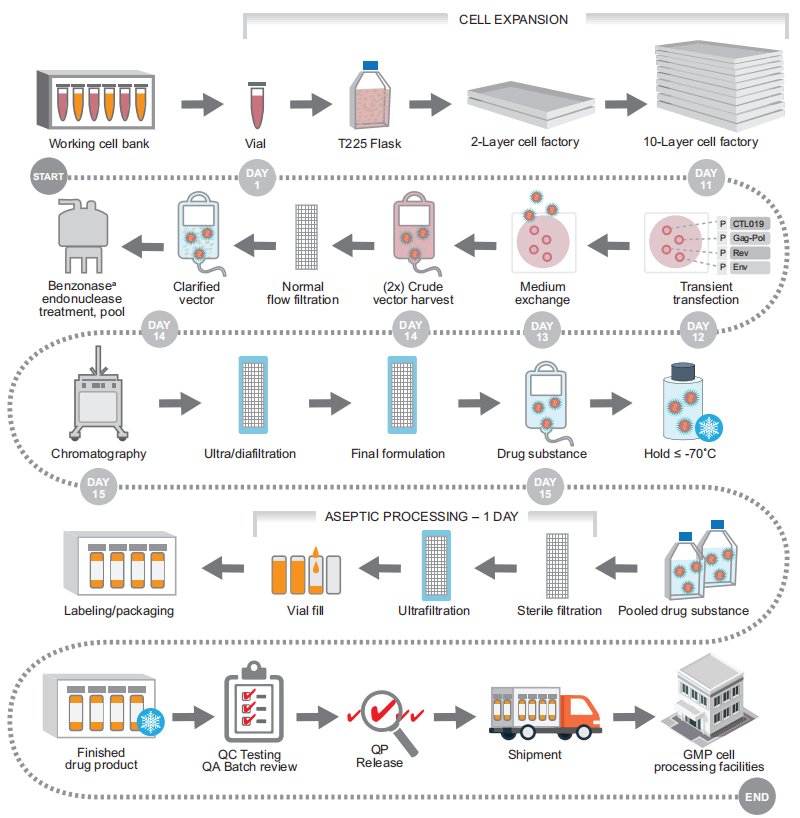
The activity of lentiviruses is affected by factors such as temperature, pH, salt concentration, osmotic pressure, and shear force during the process. Therefore, special attention needs to be paid to the impact of these conditions on the activity of lentiviral vectors during downstream purification.
Clarification filtration
The purpose of clarification filtration is to remove cell debris and large particles (greater than 1 μm) from the cell culture medium. The current mainstream process employs low-speed centrifugation (<5000×g) combined with deep filtration technology. Through the cross-flow design, it can effectively reduce the risk of filter blockage, and is particularly suitable for continuous processing at pilot-scale and above. For example, using polyethersulfone (PES) deep filter membranes with pore diameters of 0.45-1.2 μm, it can efficiently capture particulate contaminants and reduce the host cell protein (HCP) load by more than 80%, laying a high-quality foundation for the subsequent purification stage.
Purification
The strategies applicable to the moderate purification of LV mainly include chromatography and tangential flow filtration (TFF). The ultrafiltration dialysis (UFDF) in tangential flow filtration is a crucial step for the large-scale purification and concentration of lentiviral vectors (LV) as well as the replacement of the buffer solution.
During the UFDF process, while the virus particles are being concentrated, impurities with a molecular weight less than the membrane pore diameter (such as DNA) will be effectively removed along with the permeating liquid. From the perspective of the process flow, TFF can be applied both in the clarification stage to reduce the volume of the liquid in the subsequent chromatography steps through concentration, and in the process between moderate purification and refinement, to adjust the pH and conductivity of the sample by buffer replacement, thereby creating favorable conditions for subsequent chromatography operations.
Because LV is prone to inactivation, during the process, parameters such as shear force, flux, transmembrane pressure, and operation time need to be strictly controlled, and appropriate membrane materials and pore diameters need to be selected to ensure the activity of LV. Membrane materials suitable for LV purification include polyethersulfone (PES) and regenerated cellulose (RC). Moreover, the selection of membrane pore diameter is also crucial: the larger the pore diameter, the higher the impurity removal rate, but it may lead to a decrease in LV recovery rate. Therefore, the most suitable membrane material and pore diameter need to be selected based on specific process conditions.
Pure & Sterilized
The main strategies applicable to LV purification include SEC (Size Exclusion Chromatography) and TFF (Transverse Flow Filtration). Further concentration is achieved through TFF for use by groups requiring higher concentrations of the virus. However, high shear force (>5000 s⁻¹) and transmembrane pressure (TMP > 1.5 bar) can easily cause the LV capsid to rupture. Dynamic pressure control is needed to maintain the flux at 20-40 LMH to maintain activity. Finally, aseptic filtration is performed, and a 0.22 μm filter membrane is typically used for filtration during filling.
Current Challenges & Future Directions
Challenges
Although significant progress has been made in LV purification technology, the following bottlenecks still exist:
(1) Batch-to-batch consistency differences caused by membrane contamination;
(2) High capital investment for ultracentrifugation and chromatography equipment;
(3) Insufficient in vitro stability of LV leading to increased costs for cold chain transportation.
Future
To further enhance the accessibility and economy of LV production, future research could focus on the following aspects: (1) the development of new biomimetic membrane materials (such as graphene oxide composite membranes); (2) the integration of continuous flow purification processes; (3) the breakthroughs in freeze-drying formulation technology.
Downstream purification of lentiviral vectors (LV) is a core step in the industrialization of CAR-T therapy. The application of tangential flow filtration (TFF) has significantly improved the purity and recovery rate of LV. However, membrane fouling, process stability, and cold chain dependence remain major challenges. In the future, through the development of new materials, optimization of continuous flow processes, and innovation in freeze-drying technology, it is expected to further break through technical barriers and promote CAR-T therapy from the laboratory to more widespread clinical applications.