01 Biological fermentation and biopharmaceuticals
Fermentation technology refers to the technology where people utilize the fermentation process of microorganisms and precisely control the fermentation process through a series of technical means to achieve large-scale production of fermented products.
The pharmaceutical industry, as an important sector centered on drug research, development and production, mainly adopts production methods such as fermentation, chemical synthesis, and extraction from animals and plants.
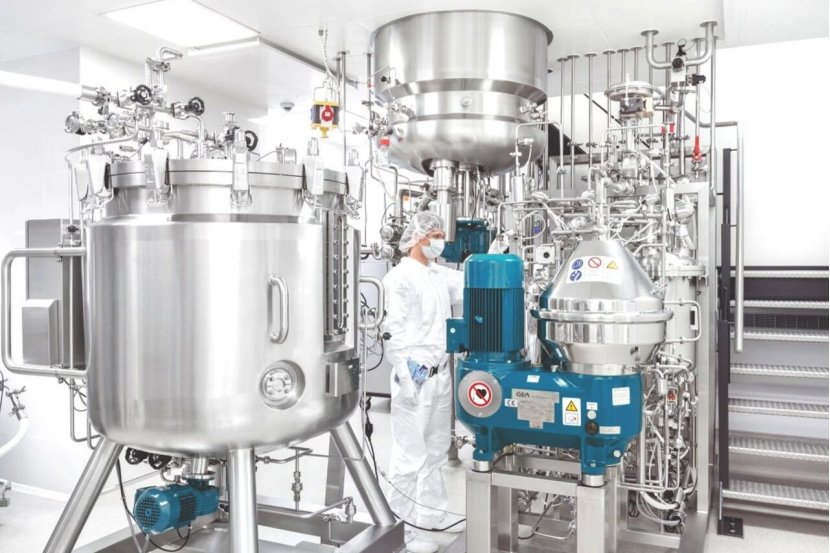
Fermentation has become a key technology in the pharmaceutical industry for producing essential drugs such as antibiotics, vitamins, and hormones, thanks to its unique advantages including high cost-effectiveness, environmental friendliness, product diversity, strong biosynthetic capabilities, excellent controllability, scalability, and significant innovation potential.
Fermentation plays a crucial role in the pharmaceutical industry. From raw material preparation to the extraction and purification of the final product, each stage requires precise equipment and technical support. Today, many drugs that were originally produced through chemical synthesis can now be manufactured using more environmentally friendly and efficient microbial fermentation methods.
Among them, the fermentation method has its unique advantages. In the pharmaceutical industry, due to its high cost-effectiveness, environmental friendliness, product diversity, strong biosynthetic ability, good controllability, large-scale production capacity, and great innovation potential, it has become an important technology for producing key drugs such as antibiotics, vitamins, and hormones.
Fermentation plays a crucial role in the pharmaceutical industry. From raw material preparation to the extraction and purification of the final product, each stage requires precise equipment and technical support. Today, many drugs that were originally produced through chemical synthesis can now be manufactured using more environmentally friendly and efficient microbial fermentation methods.
02 Biological fermentation pharmaceutical process
The bioprocessing of pharmaceuticals generally consists of three key stages: Firstly, the saccharification and liquefaction stage, where complex carbohydrates are broken down into simple sugars to provide nutrients for microorganisms; secondly, the fermentation stage, where microorganisms grow and multiply under precisely controlled conditions in fermentation tanks to efficiently produce the target product; finally, the extraction and purification stage, where the desired product is extracted using physical and chemical methods and impurities are removed to ensure the purity and quality of the final product.
The entire process involves multiple steps such as raw material processing, microbial cultivation, product synthesis, separation and purification, etc., aiming to produce efficient and safe drugs through the biotransformation process. To achieve smooth and efficient operation of each stage, corresponding equipment manufacturers are required for each step.
The following introduces the equipment requirements for the three main stages of bioprocessing for pharmaceuticals:
Saccharification and liquefaction stage
Break down complex carbohydrates into simpler sugars, providing the necessary nutrients for microorganisms.
Main equipment
Sugarization tank: Used to convert complex carbohydrates such as starch into sugars.
Liquefaction tank: Used to further liquefy the product after sugarization, making it easier for microorganisms to utilize.
Stirrer: Ensures uniform mixing of the materials during the sugarization and liquefaction processes.
Heating system: Controls the temperature during sugarization and liquefaction to ensure the reactions proceed under suitable conditions.
Cooling system: Quickly cools down after the reaction to prevent over-reaction.
pH regulation system: Adjusts and maintains the pH value during the reaction process to ensure optimal reaction conditions.
Auxiliary equipment
Pumps and valves. Pipes: Used for material transportation and flow control.
Filters: Remove impurities from raw materials to ensure the purity of the reaction.
Sensors and controllers: Real-time monitoring and control of reaction conditions, such as temperature and pH value.
Fermentation stage
Provide an ideal growth environment for microorganisms, by precisely controlling various parameters, to promote their growth and reproduction, and efficiently produce the target product.
Main equipment
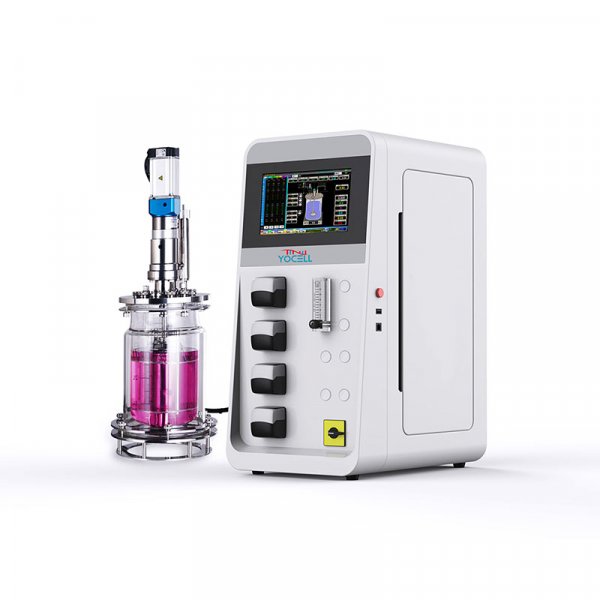
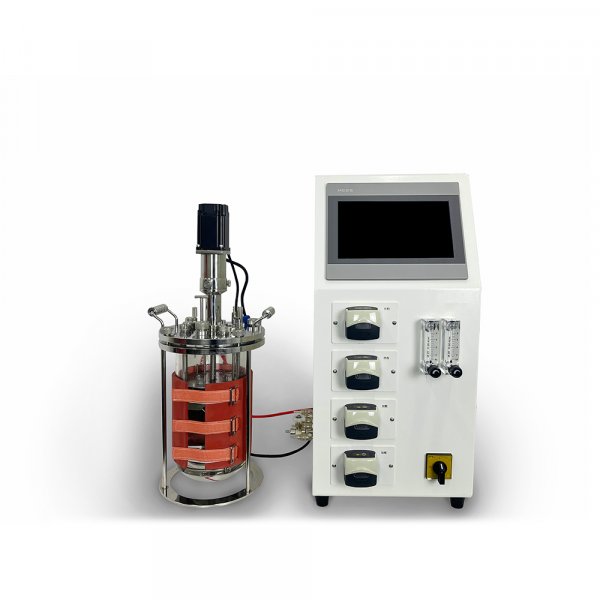
Fermentation tank: A core equipment that provides an environment for microbial growth. Depending on the production scale, it can be a small laboratory-scale fermentation tank or a large industrial-scale fermentation tank.
Air filtration system: Ensures that the air entering the fermentation tank is sterile to prevent contamination.
Gas mixing system: Ensures the uniform distribution of oxygen and other gases within the fermentation tank.
Temperature control unit: Precisely regulates the temperature during the fermentation process to ensure the optimal growth conditions for microorganisms.
pH control unit: Adjusts and maintains the pH value during the fermentation process to ensure the activity of microorganisms.
Dissolved Oxygen Measurement and Control System: Monitors and controls the dissolved oxygen concentration in the fermentation liquid to ensure the oxygen requirements of microorganisms.
Defoaming system: Prevents the formation of foam during the fermentation process, which could affect the fermentation outcome.
Automatic sampling system: Regularly collect samples of the fermentation liquid for analysis and monitoring.
Auxiliary equipment
Pumps and valves. Pipes: Used for transporting and controlling the flow of the fermentation liquid. Sensors and controllers: Real-time monitoring and control of various parameters during the fermentation process, such as temperature, pH value, dissolved oxygen, etc. Cooling system: Maintains the temperature inside the fermentation tank within an appropriate range. Heating system: Provides heat when necessary to ensure the smooth progress of the fermentation process.
The extraction and purification stage
Through a series of physical and chemical methods, the desired products are extracted from the fermentation broth and impurities are removed to ensure the purity and quality of the final product. This is a process of gradually removing impurities in the form of chemical units.
Main equipment
Centrifuge: Used for separating the solid and liquid components in the fermentation broth. Membrane separation equipment: Utilizing specific pore-sized membrane materials to separate molecules of different sizes, particularly suitable for bacterial cell separation, protein, polypeptide and other macromolecular substances purification. Commonly including microfiltration, ultrafiltration, nanofiltration membrane systems, etc.
Filter: Removes particulate matter and suspended substances from the fermentation broth. Evaporator: Removes excess water through evaporation to concentrate the target product.
Dryer: Dries the extracted product for easier storage and transportation.
Distillation tower: Used for separating and purifying organic solvents or small molecule compounds in the fermentation broth.
Crystallizer: Further purifies the target product through the crystallization process to increase its purity.
Auxiliary equipment
Pumps and valves. Pipes: Used for material transportation and flow control, mainly including sanitary pumps and valves.
Heating system: Provides necessary heat to ensure the smooth progress of evaporation and crystallization processes.
Cooling system: Rapid cooling to prevent degradation of the target product.
Sensors and controllers: Real-time monitoring and control of various parameters during the extraction and refining processes, such as temperature and pressure.
Collection tank: Used for collecting and storing the extracted products.
With the above equipment configuration, it is ensured that each stage of the biological fermentation process can be carried out efficiently and stably. Moreover, the application of advanced automation control systems and monitoring equipment makes the entire production process more intelligent and refined, meeting the high standards of modern pharmaceutical industry.
The connection of all steps in the entire biological fermentation pharmaceutical process mainly relies on the fluid equipment of the system, which connects the entire production process like the blood vessels of a production system. Besides the above production process equipment, the biological pharmaceutical equipment also includes detection equipment and industrial energy-saving technology equipment, which together constitute a complete production system.
l Testing equipment In the laboratories of biopharmaceuticals, testing equipment acts as the "eyes". Instruments such as chromatographs, spectrometers, and sugar analyzers monitor various parameters during the fermentation process in real time, ensuring that every step complies with strict quality standards.
l Industrial energy-saving technology equipment With the widespread adoption of the concept of sustainable development, industrial energy-saving technology equipment has become the new favorite in biopharmaceuticals. The application of technologies such as energy-saving motors and energy-saving control systems not only improves energy efficiency and reduces energy consumption, but also contributes to the green future of the planet. Thermal equipment such as heat exchangers recover waste heat and use it to preheat the feedstock or for other heating needs, further reducing energy consumption and achieving efficient energy utilization.
The application of biotechnological fermentation in the pharmaceutical industry has a broad prospect and will continue to play a significant role in the development and production of new drugs in the future. With the continuous advancement of technology, we can reasonably believe that biotechnological fermentation will bring more innovations and breakthroughs to the pharmaceutical industry. Through the improvement of fermentation equipment technology, it will promote the sustainable development of the entire industry.