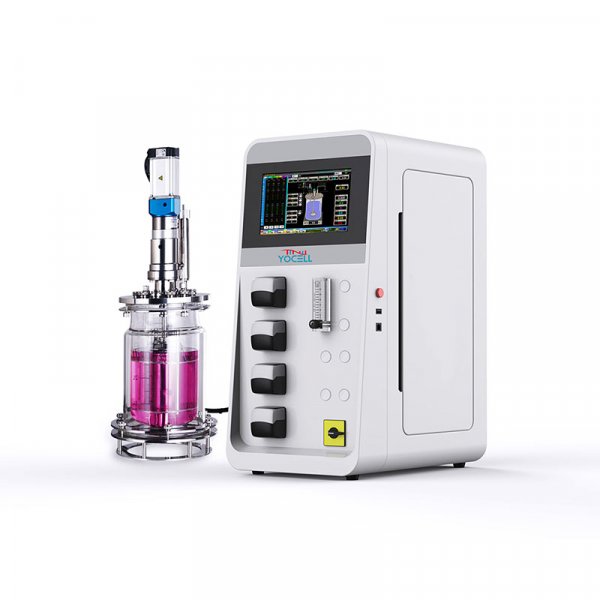
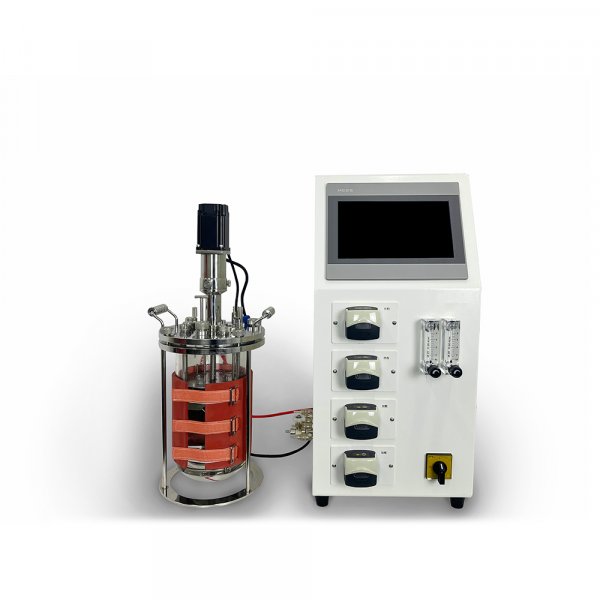
How can one achieve precise fermentation? Solve it from these four directions.
First: Precisely control process parameters.
For example, precisely controlling temperature: Temperature is one of the key factors affecting the fermentation process. Different fermentation strains and different fermentation stages have their own suitable temperature ranges. For example, yeast ferments best at around 25°C–30°C. If the temperature is too high, the yeast will become inactive; if it is too low, the fermentation rate will slow down.
In industrial fermentation, temperature sensors and automatic temperature control equipment are usually used to precisely control the fermentation temperature within a set range. Generally, the temperature control accuracy is required to be ±0.5°C or even higher, so as to ensure the stability and consistency of fermentation.
Another example is precisely controlling dissolved oxygen concentration: For aerobic fermentation, the supply of dissolved oxygen is crucial. Insufficient dissolved oxygen concentration will limit the growth and metabolism of microorganisms, while excessive dissolved oxygen concentration may cause oxidative damage.
The dissolved oxygen concentration can be adjusted by means of aeration rate, stirring speed, etc. Dissolved oxygen sensors are used for real-time monitoring, and the concentration is controlled within an appropriate range.
Second: Precisely monitor the growth state of microorganisms.
For example, precisely controlling cell concentration: Cell concentration reflects the growth condition of microorganisms and can be measured by methods such as optical density measurement, dry weight measurement, and cell counting. During the fermentation process, changes in cell concentration need to be monitored regularly in order to understand the growth stage and growth rate of microorganisms.
In the early stage of fermentation, the cell concentration gradually increases. After reaching a certain concentration, it may enter the stationary phase or decline phase. According to changes in cell concentration, fermentation conditions can be adjusted in a timely manner to ensure that the growth and metabolism of microorganisms are in the optimal state.
Another example is precisely controlling metabolite concentration: The purpose of fermentation is to produce specific metabolites, so the concentration of metabolites needs to be monitored. Analytical methods such as chromatography, spectroscopy, and enzymatic methods can be used to perform qualitative and quantitative analysis of metabolites.
According to the production rate and concentration changes of metabolites, it is possible to judge whether the fermentation process is normal and whether the fermentation conditions need to be adjusted. In the process of antibiotic fermentation, the yield and purity of antibiotics need to be closely monitored to ensure product quality.
Third: Precisely control the fermentation process.
For example, accurately determining the fermentation endpoint: Accurately determining the fermentation endpoint is very important. Ending fermentation too early may lead to insufficient product yield, while ending fermentation too late may affect the quality and stability of the product.
The fermentation endpoint can be determined by various methods, such as changes in pH value, increases in product concentration, and decreases in gas production. For example, in the beer fermentation process, when the pH value of the fermentation liquid stabilizes within a certain range, the alcohol concentration reaches the set value, and the amount of gas produced is very small, it can be judged that fermentation has ended.
Fourth: Precisely control the quality of fermentation products.
For example, precisely controlling product purity: For products produced by fermentation, their purity needs to be tested to determine whether it meets requirements. For example, in the field of biopharmaceuticals, protein drugs produced by fermentation need to undergo purity testing to ensure the safety and effectiveness of the drugs.
Purity testing can use methods such as high-performance liquid chromatography and electrophoresis to analyze the content of impurities in the product.