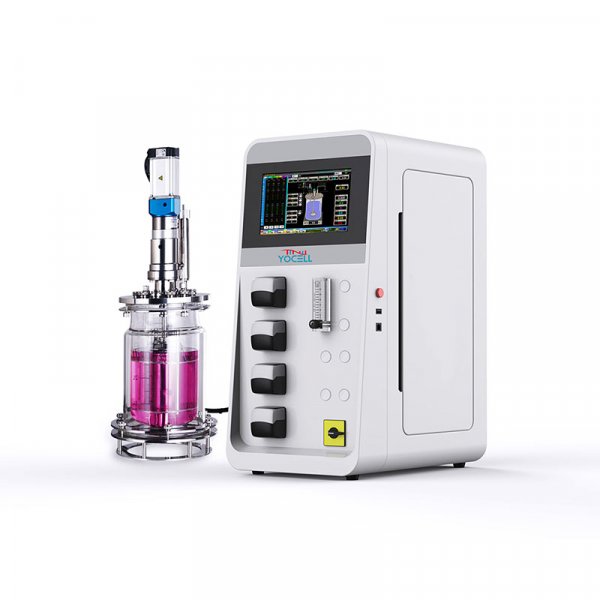
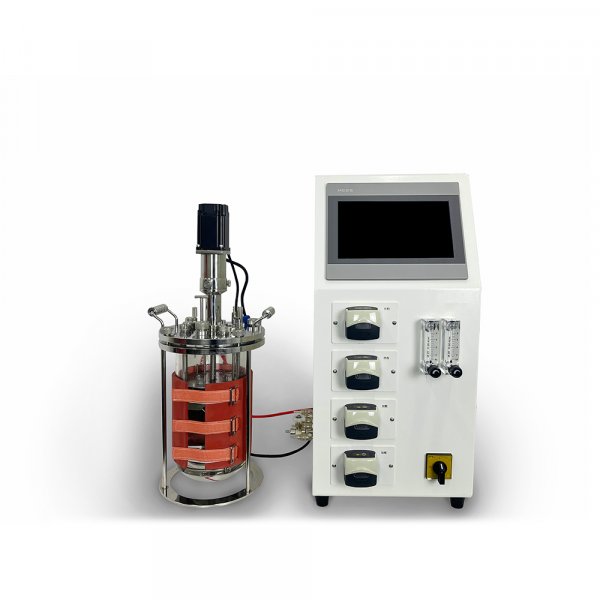
A common challenge in the bioengineering industry is: we have an excellent strain with high expression level, but the performance is far from satisfactory after scale-up cultivation. A practical check of the fermentation process reveal that the wrong type of bioreactor has been selected. This article introduces the characteristics and application scenarios of six common bioreactors to help you determine how to choose a suitable one.
1. Stirred Tank Bioreactor
This is the most mainstream and mature bioreactor at present, available in volumes ranging from 5L in laboratories to 20 tons in industrial plants.
- Advantages:
Uniform mixing and precise control of dissolved oxygen.
Full online monitoring of parameters (pH, DO, temperature, etc.).
Clear scale-up pathway and good compatibility with GMP certification.
- Notes:
The rotating stirrer generates considerable shear force, which can cause lysis of delicate cells such as CHO cells and some insect cells under high-speed stirring. In such cases, it is necessary to reduce the rotation speed, replace the impeller type, or even consider other bioreactor types.
- Suitable for:
Large-scale production of E. coli, yeast, and shear-tolerant cells (e.g., insulin, vaccines, monoclonal antibodies).
2. Airlift Bioreactor
This type of bioreactor has no motor or stirring shaft and relies on aeration to form a circulating flow. The entire system operates with low noise, low shear force and is easy to sterilize.
- Advantages:
Friendly to shear-sensitive cells.
No dynamic seals, leading to a low risk of contamination.
Energy consumption is more than 30% lower than that of stirred tank reactors.
- Limitations:
Scale-up is challenging. It performs well within 100L, but above 1000L, problems such as uneven circulation, large dissolved oxygen gradients and the common issue of "upper heating and lower cooling" may occur.
- Suitable for:
Adherent/sensitive systems (e.g., plant cells, Vero cells) or small-batch production of high-value products.
3. Bubble Column Bioreactor
It consists of a tall column with aeration at the bottom, and mixing is driven by air bubbles. The structure is extremely simple. However, it has a critical flaw: the absence of a draft tube causes air bubbles to rise straight up, resulting in mixing efficiency far lower than that of airlift bioreactors. Once foaming occurs, it is difficult to control.
- Advantages:
No mechanical components, leading to low maintenance costs.
High heat exchange efficiency.
- Disadvantages:
Moderate dissolved oxygen efficiency.
Poor foam control, making it unsuitable for high-protein expression systems.
- Suitable for:
Fermentation with simple processes, low gas production and shear-insensitive strains (e.g., production of certain organic acids or enzyme preparations).
4. Packed Bed Bioreactor
The tank is filled with carriers on which cells attach and grow, with the culture medium flowing either from top to bottom or bottom to top.
This bioreactor is well-suited for the cultivation of adherent cells. Packed bed bioreactors combined with perfusion mode are commonly used for Vero cell culture in rabies vaccine production, achieving a cell density 10 times higher than that of roller bottle culture.
- Advantages:
Extremely high cell density.
Allows continuous perfusion and yields high product concentration.
No stirring, resulting in zero shear force.
- Disadvantages:
Difficult to clean and prone to clogging.
Poor internal mass transfer, which may lead to local oxygen deficiency.
Troublesome replacement of catalysts/carriers.
- Suitable for:
Cultivation of adherent cells, immobilized enzymes, and high-density long-term culture.
5. Fluidized Bed Bioreactor
In contrast to packed bed bioreactors, the carriers here are suspended and fluidized. By controlling the flow rate, the particles are kept from settling at the bottom or being washed away.
It combines the high cell density advantage of packed bed bioreactors with the excellent mixing performance of stirred tank reactors, but has high operational requirements: an excessively low flow rate causes sedimentation, while an excessively high flow rate leads to the loss of all particles.
- Advantages:
Good mass transfer and uniform temperature distribution.
Capable of continuous operation.
- Disadvantages:
Requires precise control of fluid dynamics.
Carrier wear may cause product contamination.
- Suitable for:
Wastewater treatment, biocatalysis, and some anaerobic fermentation processes.
6. Photobioreactor
Designed exclusively for photosynthetic organisms (e.g., microalgae, cyanobacteria). The core requirement is that light can penetrate and distribute evenly in the reactor.
Open raceway ponds are relatively inexpensive but have a high risk of contamination; closed tubular or flat-panel photobioreactors offer high controllability but come with high manufacturing costs and heat dissipation challenges.
- Advantages:
High CO₂ utilization efficiency and great potential for carbon capture.
Capable of year-round operation (for indoor installations).
- Challenges:
High initial investment.
Scale limitation due to light attenuation.
Difficulty in sterilization.
- Suitable for:
Microalgae cultivation, production of DHA, astaxanthin, biodiesel, and carbon neutrality projects.
YOCELL offers a diverse range of bioreactors, providing fermentation process equipment suitable for various cultures and application scenarios.